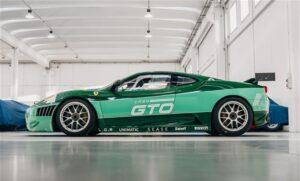
For sale by RM Sotheby’s – 1990 F40 Competition Conversion by Hamann Motorsport


For sale is a fantastic 1990 F40 Competition Conversion by Hamann Motorsport at the RM Sotheby’s MONACO Sale 2026

Estimarte is 2.250.000,– to 2.750.000,– EUR

Chassis No. ZFFGJ34B000084326
 
  • One of few Ferrari F40s with genuine period international competition pedigree
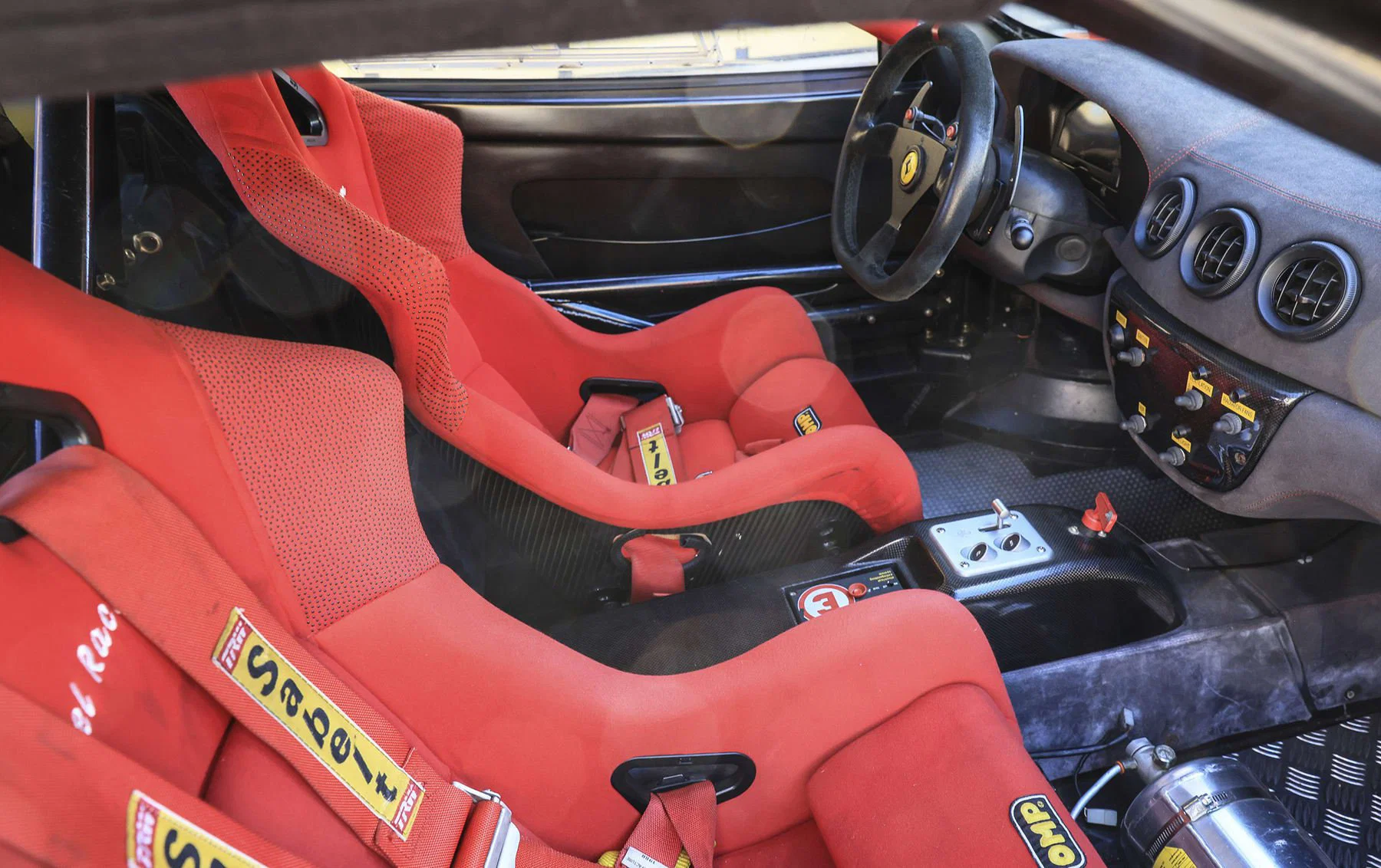
  • Sold new to Germany as a road-going F40; later converted to race specification by noted German-tuning company Hamann Motorsport with input from Peter Sauber
  • Raced in the 1996 BPR Global GT Series, most notably in the 4 Hours of Spa and 4 Hours of Nürburgring
  • Subject of a three-year, comprehensive restoration completed in 2015 by Moto Technique Ltd of Surrey, United Kingdom
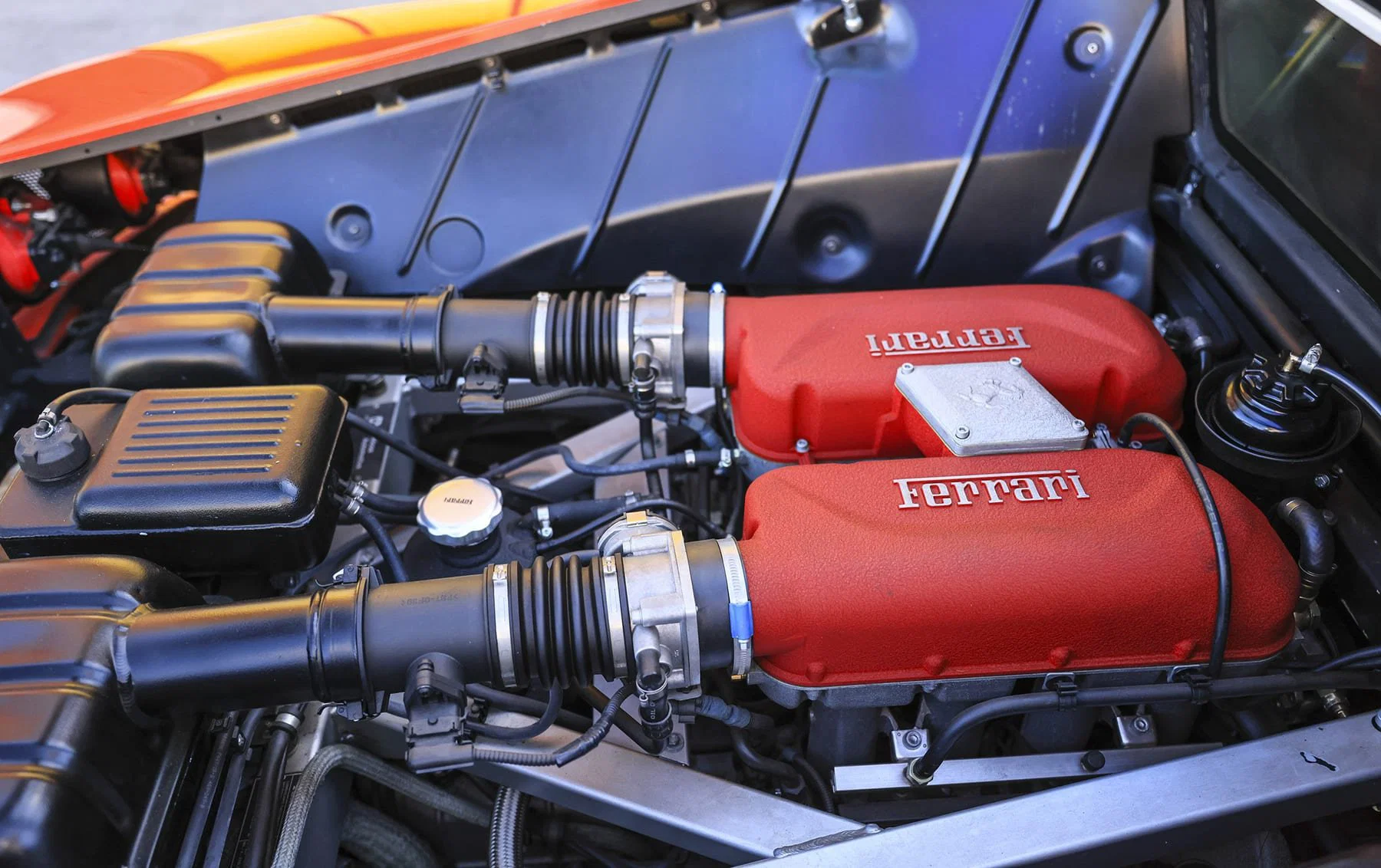
  • Powered by a fully rebuilt, twin turbocharged V-8 engine producing up to 720 horsepower via a three-stage MoTeC engine management system
  • Extensively documented in multiple media publications and accompanied by over 100 pages of restoration imagery
All details and more pictures HERE art RM Sotheby’S
 

Few cars capture the raw spirit of 1990s GT racing quite like the legendary competizione versions of the Ferrari F40, notably the F40 LM, GT, and GTE variants. Conceived to bring Ferrari’s most extreme road car into competitive billing on the international stage, the race-tuned F40s represented the ultimate evolution of the already ferocious supercar. Developed for endurance racing during the golden age of road-based GT competition, these machines took their place on grids alongside icons such as the McLaren F1 GTR, Porsche 993 GT2, and Callaway Corvette C7R in series such as the BPR Global GT Series—the precursor to modern GT endurance championships.

The factory F40 programme was led by Ferrari’s trusted competition partner Giuliano Michelotto and his renowned engineering firm. The first 19 examples were built from brand-new chassis supplied by Ferrari and converted to full LM specification. Beyond these initial factory-developed machines, several privateer teams were eager to campaign F40s in international GT racing and converted roadgoing F40s into full track weapons. While not converted by Michelotto directly, chassis number 84326 offered here is one of these fascinating privateer-developed machines—an example that went on to enjoy a genuine international competition career and later a meticulous restoration.

According to a history report by Marcel Massini, chassis 84326 was completed on 1 March 1990 as a European-specification, road-going example with roll-up windows and was delivered new to a German enthusiast through Ferrari Deutschland GmbH in Wiesbaden. The first owner was a passionate devotee of the marque who regularly displayed the car at Ferrari gatherings and track events across Europe, including appearances at Mugello in 1992 and Spa‑Francorchamps in 1993.

In 1994, chassis 84326 was sent to noted German tuner Richard Hamann of Hamann Motorsport in Laupheim. Having built his reputation through successful BMW tuning programs, Hamann recognised an opportunity to expand his operation into the development of Ferraris. Seeking to extract maximum performance from the F40 platform, Hamann enlisted the expertise of Swiss engineer Peter Sauber—the founder of the renowned Sauber Formula 1 team—under whose guidance the Ferrari V-8 received twin KKK turbochargers with increased boost and dual wastegates, along with a host of reinforced internals. These modifications dramatically elevated the engine’s performance, with output reportedly reaching as much as 700 horsepower.

Coupled with a revised nose inspired by the F40 LM, as well as an enhanced rear wing for greater stability and upgraded brakes and suspension, the competition-modified F40 was featured on the cover of the June 1994 issue of Motor magazine, where it was praised for its sharper driving dynamics and stronger low-end power delivery. Envisioning a limited line of tuned F40s, Hamann’s conversion was far from inexpensive—reportedly costing as much as 75 per cent of a standard F40’s original sticker price, in addition to the cost of the donor car itself.

Eager to demonstrate the car’s performance potential and justify its extraordinary price tag, Hamann sought to enter the car in competition. Regulatory changes ahead of the 1996 season allowed him to partner with Jörg Hartmann Motorsport and campaign chassis 84326 in the BPR Global GT Series. However, as was often the case for independent GT teams of the era, limited funding hindered both development and reliability. During the 1996 BPR season, the car retired at the Nürburgring and later recorded a 26th-place finish at Spa-Francorchamps.

Chassis 84326 then passed through a succession of German enthusiasts before moving to the United Kingdom in the early 2000s. Over time the car fell into neglect and was eventually stored in a barn in the north of England, where it remained largely forgotten until 2012. That year it came to the attention of a passionate Ferrari enthusiast, who had been fortunate enough to secure an F40 when new and had long carried the regret of parting with it.

The car was sent to the respected Ferrari specialists at Moto Technique Ltd of Surrey, led by experienced hand in all-things-Ferrari Kevin O’Rourke, where it became clear that years of hard racing had taken a severe toll. The suspension components were worn beyond repair, the braking system required complete replacement, and the fuel tanks were in extremely poor condition. Evidence of an electrical fire was even discovered beneath one of the tanks.

At this stage the project evolved from a simple refurbishment into a comprehensive restoration carried out with an uncompromising philosophy. The car would be returned to as-new condition, while subtly benefiting from modern engineering knowledge. Michelotto Automobili supplied newly fabricated suspension assemblies, braking components, and numerous specialised parts crafted from Avional aluminium, magnesium, and titanium.

The bodywork also required significant attention, as certain areas had previously been repaired in fibreglass rather than the original carbon-Kevlar composite. To restore proper weight and structural integrity, the front clamshell was completely remanufactured in the correct carbon-Kevlar construction, while other panels underwent extensive refinishing to reveal the subtle carbon weave beneath the paint—replicating the appearance seen on factory-fresh examples.

The engine rebuild was entrusted to renowned engineering firm Crosthwaite & Gardiner, who carefully inspected every internal component and renewed where necessary, resulting in a fully rebuilt power unit capable of delivering its formidable performance with confidence. To enhance reliability and drivability, a multi-stage engine management system from MoTeC was integrated, providing three selectable power modes of approximately 550, 650, or 720 horsepower respectively, allowing the driver to tailor performance while preserving mechanical longevity.

Every component—from suspension to fuel system to gearbox—was repeatedly assembled and removed to achieve ideal alignment and finish. The result is a car restored with extraordinary attention to detail, blending historical authenticity with carefully considered improvements. Following the completion of its restoration, the car achieved notable recognition as the cover feature of evo magazine, issue number 217. In the accompanying article, written by Richard Meaden and titled “No Retreat, No Surrender”, the publication presents a comprehensive exploration of the car’s provenance, driving dynamics, and restoration process.

With its widened bodywork, towering rear wing, and ferocious twin-turbo V-8, the F40 LM represents the ultimate expression of Ferrari’s ultimate analogue supercar. This tribute to that legendary machine, restored with exceptional care and sporting genuine competition pedigree, offers collectors an opportunity to experience one of the most visceral Ferraris of the modern era. Few cars so perfectly capture the drama, sound, and spectacle of 1990s GT competition—and fewer still have been returned to life with such dedication.

Challenge and GT Days – Bang&Olufsen ltd. edition Beosound A9 speaker

For the 2026 edition, Bang & Olufsen is offering bespoke pieces of the iconic Beosound A9 – Challenge and GT Days Monza Limited Edition, featuring a custom cover inspired by the speed, design, and racing spirit of the event.

Finished in Black Anthracite, this collector’s edition transforms the legendary Beosound A9 into a unique object celebrating the passion of GT racing and exceptional sound.

Exclusivity at a glance

Picture is taken from the official poster for our Challenge and GT Days 2026 in Monza Painted again by our friend and artist Yan Denes

Limited edition only available worldwide from today until the 21 May 2026

  • Challenge and GT Days Monza bespoke cover
  • Beosound A9 Black Anthracite edition
  • Reserved exclusively for Challenge and GT Days Monza customers

The reservation window opens today and will close on May 21, the final day of the Challenge and GT Days Monza

The price of one unit is: 3.950 Euros including austrian VAT

For collectors and enthusiasts alike, this is a rare opportunity to secure a piece where performance, design, and sound excellence meet.

Should you wish to reserve one of these limited editions, we invite you to contact us at your earliest convenience. The ltd. edition Beosound A9 speaker is reserved exclusivity for Challenge and GT Days Guests insted of Bang & Olufsen customers.

For enquiries, please contact our VIC Relationship Manager Maria Beatrice Baraldini:

mabb@bang-olufsen.dk

Mobile +41783322522

We invite you to contact us HERE at your earliest convenience.

For sale by RM Sotheby’s – 1984 Ferrari 308 GT/M


For sale by RM Sotheby’s art there MONACO Sale 2026 – 1984 Ferrari 308 GT/M

All details and more pictures HERE at RM Sotheby’s

Chassis Nr. 001

Estimate is 1.500.000 to 2.000.000 Mio. Euro

  • The ultimate evolution of the 308 platform; the first of only three examples built
  • Key development car in the creation of the legendary Ferrari 288 GTO and F40
  • The first purpose-built race car designed and built primarily in the hands of the Michelotto family
  • Currently fitted with a special, experimental Tipo F105L engine
  • Achieved blisteringly fast lap times around Fiorano during testing; quicker than the more powerful 512 BB/LM and subsequent F40
  • Sold by the factory to five-time 24 Hours of Le Mans podium finisher Jean Blaton in Belgium
  • Outstanding opportunity to own one of the few very special race cars from the dawn of the Ferrari hypercar era

While the 308 GT/M may not yet be a household name, the significance of the Michelotto-inspired race car should not be underestimated in Ferrari history. In the context of motorsport, it was conceived as the ultimate evolution of the mid-engined Ferrari 308 platform, only for the Group B formula that shaped its creation to evolve before the car properly had a chance to compete on behalf of the factory. Then, there’s its impact on the modern-day hypercar scene. For, without the GT/M, there might never have been the 288 GTO. And from that icon, Ferrari’s ‘Big Six’—completed by the F40, F50, Enzo, LaFerrari, and F80—was born to spur on rivals, not least Porsche and McLaren.

The GT/M’s distant cousin was the 308 GTB road car, which had already been adapted for competition. Between 1978 and 1983, variants entered a plethora of race and rally events in both Group 4 and succeeding Group B specification—most notably counting wins in the Targa Florio and Tour de France. But, in partnership with Ferrari, Michelotto—effectively the marque’s customer racing arm—decided to create a truly bespoke prototype.

As a result, the Bosch fuel-injected, four-valve-per-cylinder, 3.0-litre naturally aspirated V-8 engine was rotated to sit longitudinally in a tubular chassis, while power increased from 310 to circa 370 horsepower. The five-speed Hewland gearbox was mounted upside down to make room for a Formula 1-derived Borg and Beck clutch. The double-wishbone suspension was rose-jointed and matched with Bilstein dampers. Brembo supplied ventilated disc brakes and four-piston callipers, and a hydraulic handbrake was fitted to make light work of hairpin bends out on the rally stages. The mechanical components were then cloaked in more aerodynamic carbon fibre and Kevlar coachwork, crafted by Auto Sport of Bastiglia, for a total weight of a mere 840 kilograms. In fact, the 308 GT/M was the first Ferrari race car outside of F1 to gain a composite body.

Designed with a low centre of gravity and to be easy to work on in overnight service parks, just three examples of the 308 GT/M were built by Michelotto. The first of those, chassis number 001 offered here, was tested extensively at Fiorano as parts were optimised and even different wheelbase lengths were tried. However, a full Works programme in Group B rally championships would ultimately be cut short. The limiting factor was a rear-wheel-drive layout at a time when the likes of the four-wheel-drive Audi quattro and Peugeot 205 Turbo 16 were coming to the fore.

While the 308 GT/M was being honed behind closed doors, in early 1984 loyal client Jean Blaton caught wind of this new silhouette racer. The five-time 24 Hours of Le Mans podium finisher approached Maranello to convince Michelotto to sell him chassis 001 via Ferrari concessionaire Garage Francorchamps. Entered under the banner of legendary Belgian race team Écurie Francorchamps, Blaton would campaign this car in club-level events during the mid-to-late 1980s, including at Circuit Goodyear in Luxembourg further to winning contests at Zandvoort in the Netherlands and Zolder in Belgium.

Of the two other 308 GT/Ms, chassis 002 appeared in the 1984 Rally Autodromo di Monza and showed promising speed to lead the event before crashing; the third car was built up at the end of 1986. The trio would come to have a long-lasting legacy, paving the way for the creation of the 288 GTO and, in turn, its F40, F50, Enzo, LaFerrari, and F80 successors.

In January 1996, chassis 001 was sold across the border to the former President of the Ferrari Owners Club of France, Mr Guy Domet. It was then purchased by an American custodian in December 2006 to be raced in the Ferrari-Maserati Historic Challenge series. Regularly enjoyed on track, it featured as part of the 2006 and 2007 Cavallino Classic meetings at Moroso Motorsports Park in Florida, at Road America in Wisconsin, Lime Rock Park in Connecticut, Sonoma Raceway in California, and Virginia International Raceway.

To keep the 308 GT/M in fine fettle for its use on circuit, the car was regularly prepared by Ferrari specialist Motion Products in Wisconsin. As part of the maintenance, the engine, driveshafts, cooling system, clutch, and transmission were routinely rebuilt and serviced. Invoices (dated from 2006 to April 2009; available to view on file) for the works and trackside support total almost $390,000.

Acquired by the consigning owner approximately 10 years ago, chassis 001 stands out as an incredibly rare Ferrari competition car that holds a fascinating backstory from the dawn of Ferrari’s hypercar era. Having achieved lap times at Fiorano that eclipsed the 288 GTO, F40, and even the larger V-12 engine 512 BB/LM, the 308 GT/M was proven to be blisteringly fast and one of the few extremely rare and exclusive race car models from an era that is now entering its golden period in the collector car market.

Versus the likes of the Ferrari 250 GTO, Testa Rossa, P series of endurances racers, and the Scuderia Formula 1 racers, the 308 GT/M might be lesser known in the annals of Maranello motorsport. But its impact on the marque’s flagship hypercars cannot be understated. The opportunity for the Cavallino connoisseur to add this to their stable is not to be missed.

For sale – 2008 Ferrari F430 GTC / GT2 Evo

For sale is a 2008 Ferrari F430 GTC / GT2 Evo 

All details and more photos HERE at Simon Furlonger

POA

Chassis: 2610

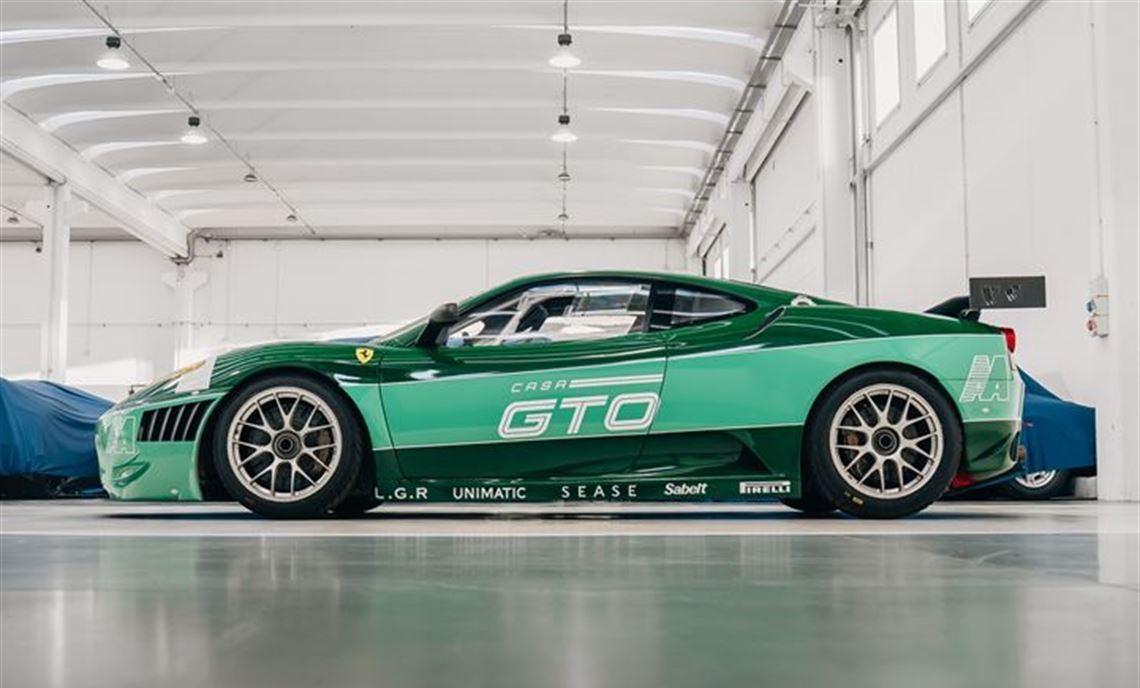
Ferrari’s abundant history of successful competition cars and countless victories is no mean feat, especially when it comes to the collaborative efforts undertaken by none other than Michelotto and Corse Clienti. The F430 GTC is no exception, a car that was built without compromise, proving itself astoundingly capable with class championship wins in the ALMS, FIA GT, and scoring class wins in 2007, 2009 and 2010 12 Hours of Sebring, at the 2008 and 2009 24 Hours of Le Mans, at the 2006, 2008, and 2009 24 Hours of Spa and at the 2008 and 2009 Petit Le Mans.

Furlonger are pleased to offer this Ferrari F430 GTC EVO, chassis no. 2610, 1 of just 14 GTCs produced, and one with impressive period results. The F430 GTC is eligible for a variety of high-quality championships and events including ‘Peter Auto Endurance Racing Legends’, ‘Masters Endurance Legends’ and Ferrari’s own exclusive ‘Clienti’ events.

The F430 GTC was designed to compete in international GT2 class racing, such as the American Le Mans Series, Le Mans Series, FIA GT Championship, and 24 Hours of Le Mans. The fastest and most unyielding motorsport version of the F430, the GTC is widely considered one of the most exciting and engaging contemporary racing cars produced by Ferrari.

One of two F430 GTCs ordered new by Pierre Ehret, a successful winery owner, businessman, and gentleman driver, chassis no. 2610 was configured without sparing any expense. Additional options included a data acquisition system, water and engine oil quick refilling equipment, air conditioning, 24-hour race lights, a carbon clutch and an uprated front brake cooling system.

Run by Tafel Racing, the pair of Ferrari F430 GTCs arrived at Sebring in March for the season-opening round of the American Le Mans Series — the legendary 12 Hours of Sebring and the most significant race on the calendar. Car No.73 was shared by its owner Pierre Ehret, team principal Jim Tafel, and the late Allan Simonsen. The highly respected Danish driver would later become an Aston Martin works driver, compete at Le Mans on seven occasions, and claim the 2009 Asian Le Mans Series GT2 Championship.

After an infamously gruelling twice-around-the-clock contest, No.73 crossed the line fourth in class, a remarkable result that saw it finish ahead of its sister Ferrari and just three laps shy of a podium position.

From Sebring onwards, No.73 delivered a season defined by consistency and pace. Competing in nine ALMS rounds at some of North America’s most iconic circuits, including Road Atlanta and Laguna Seca, the Ferrari secured top-ten finishes in eight races, with just a single retirement marring an otherwise exceptional campaign.

Thanks to this consistent points-scoring form, Tafel Racing finished second overall in the GT2 class of the 2008 American Le Mans Series Championship, narrowly missing out on the title by just 16 points to the Flying Lizard Porsche 911 RSR, while finishing a commanding 36 points ahead of the factory-backed Risi Competizione Ferrari effort.

Chassis #F131EVOGTC 2610 was retired and sold following its debut ALMS season, carefully preserved and maintained. Its outstanding provenance and exceptional originality later attracted the attention of its next owner, during whose stewardship the Ferrari returned to competition for selected rounds of the 2012 Pirelli World Challenge. Driven by David Welch, the then four-year-old F430 GTC recorded three further top-ten finishes against significantly newer machinery.

Although it first raced over a decade ago, this Ferrari is now eligible for some of the most desirable historic racing series in the world. These include the Peter Auto Endurance Racing Legends, where it stands as the most recent and therefore ultimate GT2 Ferrari eligible, as well as the Masters Endurance Legends series, alongside invitations to Ferrari Challenge and exclusive GT Days.

Recently restored to its iconic 2008 Sebring 12 Hours livery and prepared in 2019 by respected marque specialist Bob Houghton, the car has since been run at a handful of private track days. Remaining highly original throughout, #F131EVOGTC 2610 is now offered for sale and poses an exciting opportunity to purchase one of Ferrari’s most visceral and engaging racing cars.


For sale – 1982 Ferrari 512 BB LM

For sale is a 1982 Ferrar 512 BB LM in France

More details and photos HERE at MMC Paris

Year : 1982
POA

FEATURES

Ferrari 512 BB LM completed in November 1982, chassis #44023, the 25th and final example produced of the series developed by Ferrari in collaboration with Michelotto for international endurance racing. Delivered new through Jacques Swaters’ Garage Francorchamps (Belgium), one of Ferrari’s most prominent racing distributors.

COMMENTS

Ecurie Francorchamps Racing in preparation for the 1983 Le Mans Race. The car was built on Factory chassis # 44023 and the Scuderia installed Motor # 0034.Unfortunately car never raced by Jacques Swaters Racing Team. In fact it was never raced in period competition and as a result appears in its original factory livery. A just out of the box 1982 racing machine. Instead, the car has spent almost its entire life in two museums until rescued by the Liebhaber Racing team in October of 1998. The car was obtained from Symbolic Motor Car Company in LaJolla California who had acquired the car from its the current owner, DeanBecker. Becker had acquired the car from Kato in Japan where it resided in the “Boxer Museum” from 1989 to 1998. During that period the car was seen in two club races, driven by professional drivers, representing Kato. From 1985 to 1989 the car resided in the Ford Auto Museum in Dearborn Michigan and prior to that it remained in the possession of Jacques Swaters.

1983
October 27, sold to Gary Kohs, a Ford employee, Michigan, USA.

1986
Meadow Brooks Historic Racing and Concours d’Elegance, entered by Gary Kohs.

1990
December, for sale at Shelton Ferrari.

1991
August 17, sold by Rick Cole at Monterey to Japanese collector Shigeru Kato.

1998
For sale by Grand Prix Classics, La Jolla, CA, USA.

2017
Ph . Lancksweert

2021
David Hart

2023
-Current owner

* Final example of only 25 Ferrari 512 BB LMs built
* Documented history from new
* Ready to race with his available FIA Papers.
* Eligible for major international historic racing events (Le Mans Classic, Peter Auto series, Masters Endurance Legends, etc.)

An iconic 1980s Ferrari 12-cylinder endurance racer combining rarity, historical importance and historic racing eligibility.

Full documentation and further details available upon request.

For sale by RM Sotheby’s – 2018 Ferrari FXX K Evo

A fantastic Ferrari FXX K Evo is for sale at the RM Sotheby’s MONACO Auction

Chassis No. ZFF84DXX000238035
 
Estimate: Euro 5.200.000,– to Euro 5.700.000,–
 
Offered without reserve
 
More pictures and details HERE at RM Sotheby’s
 
  • One of only approximately 20 examples delivered new with the Evo upgrade package
  • Benefits from the care of a single owner
  • Finished in Rossa Martino with Bianco Avus accents
  • Odometer displays only 4,244 kilometres at the time of cataloguing
  • A rare example of the legendary XX Programme’s most advanced V-12 model

Ferrari Corse Clienti’s XX Programme claimed two strong successes from 2005 to 2010, first with the Enzo-based FXX model and then with the 599 GTB-derived 599XX. Conceived as a means of both developing new road car systems while engaging preferred loyal customers, the XX Programme positioned these two models as track-only, non-competition cars whose owners could use them in marque-sponsored events. The resulting data would be poured into a future Ferrari model, ensuring satisfaction and gain for both customer and manufacturer—the proverbial win-win.

Of course, a true successor to the FXX could only evolve with the arrival of a new Ferrari hypercar model, a milestone that eventually transpired at the 2013 Geneva International Motor Show. With all eyes on one of the world’s greatest stages for automotive debuts, Maranello introduced the potent and beautiful hybrid LaFerrari. Once this was accomplished, it was only a matter of time before an exclusive track-only version for use in Corse Clienti events would follow. Sure enough, at the Finali Mondiali held at Yas Marina Circuit in Abu Dhabi in 2014, Ferrari unveiled the LaFerrari-based FXX K, a breathtaking fusion of form and function.

Like the LaFerrari, the FXX K was propelled by a Formula 1-derived Hy-Kers hybrid powerplant centred on a further version of the type F140 V-12 engine, the F140 FF, now displacing 6.3 litres. The mill was upgraded with new camshafts with mechanical (rather than hydraulic) lifters, specially polished intake manifolds, and a new exhaust system without mufflers, contributing to an increase to 848 horsepower.

A “Manettino” dial on the centre console provided four different levels of assist from an electric motor, including one designed for “instant maximum torque delivery”, offering an additional 187 horsepower. With total output now reaching 1,035 horsepower, 85 more than the LaFerrari, this was undoubtedly a thoroughbred of unprecedented stature.

The LaFerrari bodyshell underwent numerous tweaks for optimal aerodynamic performance on the track, with the nose receiving a two-part splitter with vertical fins on either end, while the rear end was transformed with twin spoiler-ettes to manage airflow, improving downforce by as much as 50 per cent over the LaFerrari. Boasting a much more menacing stance, the FXX K is 194 millimetres longer and 59 millimetres wider than its road-going sibling, while shedding some 90 kilograms for a weight of approximately 1,255 kilograms. The improved power-to-weight ratio was evident in the new car’s testing times, as it lapped Fiorano in just 1min14sec, five seconds faster than the LaFerrari.

In 2017, following the pattern of the prior two XX Programme models, Ferrari began offering an Evoluzione upgrade for FXX K owners. The FXX-K Evo featured a host of aerodynamic refinements, including redesigned rear brake intakes and a fixed full-width dual rear wing that sits over an active spoiler, in total improving downforce by 23 per cent over the FXX K; and a shocking 75 per cent more than the original LaFerrari.

As with its two predecessors, production of the FXX K was kept to a minimum with approximately 60 examples currently accounted for. It remains the most advanced product of the XX Programme to date and, for the time being, the ultimate customer-available Ferrari development car.

Offered by its original owner, this 2018 Ferrari FXX-K Evo was purchased in October 2017—according to the agreement document on file. Part of the final batch of approximately only 20 FXX K examples which were delivered new from the factory with the highly desirable Evo upgrade package, chassis number 238035 is presented in Rossa Martino with Bianco Avus accents. The race number “87” boldly sits on each flank to complete the livery. At the time of cataloguing, the odometer displayed 4,244 kilometres. Meanwhile, a technical report published in June 2024 indicated 85 per suspension bushing life, 45 per cent for the driveshaft, 85 per cent on the gearbox, and 85 per cent for the engine life.

Significantly, a Corse Cliente invoice on file confirms the FXX-K received a high-voltage battery overhaul in April 2024. At this point, the complement of fluids were flushed and replaced in addition to the installation of new brake pads. The total cost for the work amounted to €68,511.89. It is further accompanied by its “Yellow Book” for special-edition models

As one of Maranello’s most ferociously advanced production-based track cars yet devised, chassis 238035 would make for an outstanding acquisition for any supercar enthusiast, racing participant, or marque aficionado. The next caretaker can look forward to a warm welcome at marque-focused concours d’elegance and Corse Clienti events or relish the unique thrill of testing the car’s limits on circuit, where the wrath of 1,035 horses can be harnessed in stunning fashion.


For sale by RM Sotheby’s – 2020 Ferrari 488 GTE Evo

For sale by RM Sotheby’s MONACO Auction – 2020 Ferrari 488 GTE Evo

Chassis Nr. 3844

Estimate 1.300.000,– EUR to 1.600-000,– Euro

More pictures and details HERE at RM Sotheby’s

  • Campaigned by multiple championship-winning Ferrari factory team AF Corse
  • Entered the 24 Hours of Le Mans in 2020 and four European Le Mans Series races
  • Presents in the race number “52” livery; worn for its Circuit de la Sarthe appearance
  • Accompanied by a Ferrari Certificate of Origin and technical manual
  • Eligible for numerous GT race series and Ferrari’s Club Competizioni GT programme

Just five months after the Ferrari 488 GTB supercar premiered at the Geneva Motor Show in March 2015, its competition counterpart rolled out of the pitlane at the Vallelunga circuit in Italy for the first time. Powered by a twin-turbocharged 3.9-litre V-8 engine, the Michelotto-built 488 GTE embarked on a few early shakedown laps ahead of an exhaustive development programme in time for the 2016 motorsport season, from which Ferrari emerged with the FIA World Endurance Championship GT class Constructors’ Championship crown.

The following year, the 488 GTE swept the board. It earned the marque back-to-back Constructors’ titles, factory squad AF Corse topped the Teams’ standings, and Works drivers Alessandro Pier Guidi and James Calado were crowned LMGTE Pro champions. As BMW joined manufacturers Porsche, Ford, and Aston Martin in the bid to dethrone Ferrari, the aerodynamically revised 488 GTE Evo was introduced for 2018.

Offered here is chassis number 3844, which was issued with its accompanying Certificate of Origin on 21 February 2020. It was then sold new from the Ferrari Competizioni GT racing department to official marque dealership Garage Zenith SA of Sion, Switzerland in June. Soon put into action, the 488 GTE Evo made its debut the following month in the European Le Mans Series round at Paul Ricard. After two test session at the French venue, the car was entered by championship-winning factory team AF Corse and piloted by Swiss endurance driver Christoph Ulrich alongside team-mates Alexander West (the Swede would win that year’s GT World Challenge Europe Pro-Am Drivers’ title) and German businessman Steffen Görig. They combined to finish in 25th place overall, ranking 5th in the LMGTE class.

The trio reunited the next month for the ELMS contest at Spa-Francorchamps. Crossing the line after four hours, the Ferrari scored 29th overall and 7th in its category. For their third outing, a return visit to Paul Ricard, Ulrich and Görig were partnered by triple Brazilian Stock Car champion and two-time 24 Hours of Le Mans class winner Daniel Serra. The Ferrari factory driver helped the 488 GTE Evo to 6th in class (27th overall).

That hat-trick of ELMS events provided a solid footing ahead of an entry into the most famous of all endurance races. Due to delays brought about by the global pandemic, the 2020 edition of Le Mans was pushed back from a usual June calendar slot to mid-September. For the visit to the Circuit de la Sarthe, West reunited with team-mates Ulrich and Görig.

The AF Corse line-up had their qualifying times deleted when the stewards determined that the car had been lifted while under restricted Parc Fermé conditions. Accordingly, the Ferrari started 57th on the grid. Retirement then beckoned on lap 80, when West span through the Porsche Curves. A tap into the barrier resulted in damage to the front-left suspension.

Chassis 3844 was repaired for the ELMS season finale at the Algarve International Circuit (Portimão). Ulrich, West, and Görig climbed five places in the race but ultimately withdrew just past half distance—a legacy of Ulrich colliding with a rival Porsche. RM Sotheby’s is advised by the vendor that the repair was not deemed significant enough to return the car to Michelotto, thus AF Corse repaired the car in-house.

Since its retirement from front-line competition, the Ferrari was purchased by the consigning owner in October 2022 via Parabolica Sports of Luzern, Switzerland. Please note, a data sheet (available to view on file) issued that same year recorded the chassis to have covered fewer than 21,500 kilometres while the engine was shown to be out of life. More recently, a vehicle check and bleed of the brake system was performed by AP Racing Support in Wetzikon, south-east of Zurich, in March 2025. Chassis 3844 presents extremely attractively today in the livery configuration it wore at Le Mans.

For commentary on advisable safety-related items that may require renewal prior to the car racing again, please contact a member of the RM Sotheby’s Car Specialist team.

Should the next owner wish to add to chassis 3844’s competition history, the 488 GTE Evo remains eligible for a variety of national-level GT racing series in addition to the prestigious Club Competizioni GT official Ferrari programme.

Date Event Driver Entrant Race # Result
19 July 2020 European Le Mans Series Paul Ricard Christoph Ulrich / Alexander West / Steffen Görig AF Corse 51 25th (5th in class)
9 August 2020 European Le Mans Series Spa-Francorchamps Christoph Ulrich / Alexander West / Steffen Görig AF Corse 51 29th (7th in class)
29 August 2020 European Le Mans Series Paul Ricard Christoph Ulrich / Steffen Görig / Daniel Serra AF Corse 51 27th (6th in class)
19-20 September 2020 24 Hours of Le Mans Christoph Ulrich / Alexander West / Steffen Görig AF Corse 52 DNF (accident)
1 November 2020 European Le Mans Series Algarve Christoph Ulrich / Alexander West / Steffen Görig AF Corse 51 DNF